
What to Do If Your Pipes Freeze: How to Shut Off Your Water Before It Bursts
TL;DR
If you find a frozen pipe has split or started leaking, shut off your main water valve immediately to stop the water flow. Then open the affected hot and cold faucets to release water pressure. Use a hair dryer or other gentle heat near the faucet and slowly move toward the frozen section to thaw the pipe. Don’t use an open flame or torch, as it can damage the pipe or create a fire hazard.
How Water Pressure Actually Breaks Your Plumbing
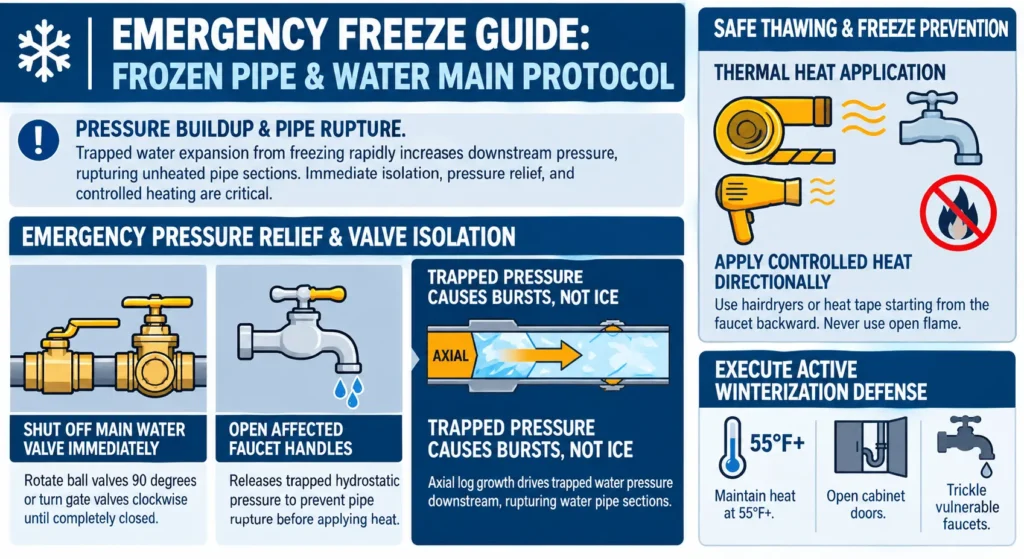
What People Think Happens | How Pipes Actually Burst |
Solid ice expands sideways and cracks the pipe at the freeze site. | Expanding ice pushes trapped liquid water downstream toward a closed tap. |
The break happens right where the pipe is frozen. | The break happens in an unfrozen section where water pressure gets too high. |
Thawing the ice plug is the only goal. | Opening taps to relieve water pressure is the main defense against a burst. |
Early Warning Signs That Your Pipes Freeze
- Sinks or Showers Won’t Run: You turn on a tap and get only a trickle or no water at all.
- Frost on Exposed Lines: You see surface frost, heavy condensation, or slight bulging on exposed pipes.
- Strange Plumbing Sounds: Fixtures make gurgling, banging, or whistling sounds when you open a tap.
- Unusual Odors: Foul smells come up from drains because ice is blocking the vent stacks.
How to Find and Shut Off Your Main Water Valve
Shutting off your main supply valve stops pressurized water from feeding a leak. Every homeowner should locate this valve before winter weather hits.
Indoor Valve Locations
In colder climates, main shut-off valves sit indoors to stay warm. Check these common spots:
- Front Foundation Wall: Look along the front wall inside your basement or crawl space, usually within three feet of where the water line enters through the concrete.
- Utility Closets: Check near your water heater or furnace inside a main floor utility room.
- Under Sinks: Look inside vanity cabinets for local fixture valves if only one sink loses flow.
Outdoor Valve Locations
In warmer southern regions or slab-on-grade homes, the main valve often sits outside:
- Meter Box at the Curb: Look for a ground-level plastic or concrete box marked “WATER” near the street or front property line.
- Exterior Walls: Look for a valve handle mounted on an outside wall near your garage or garden hose spigot.

Safe Steps to Thaw Frozen Lines Before They Rupture
- Step 1: Open the Faucet First:
Before you apply any heat, open both the hot and cold handles on the faucet served by the frozen line. Leaving the tap open gives melting water and expanding pressure an immediate escape route. As ice melts, running water carries warm fluid down the pipe to speed up the process.
- Step 2: Heat from the Faucet Back Toward the Freeze
Always start warming the pipe at the open faucet end and work backward toward the ice blockage. If you heat the middle of an ice plug first, you trap melting liquid between two solid ice dams. This creates a localized pressure spike that can split the pipe while you thaw it.
Thawing Tool | Safety Profile | Safe Usage Protocols | Hazards to Avoid |
Electric Hair Dryer | Safe & Recommended | Sweep warm air back and forth across 12-inch sections of pipe. | Keep electrical cords clear of standing water. |
Thermostatic Heat Tape | Safe & Recommended | Wrap the tape tightly around the exposed pipe per product directions. | Use UL-listed tape only; do not overlap wraps. |
Hot Water Towels | Safe & Recommended | Wrap thick towels around the line and pour hot water over them. | Messy process; keep catch buckets underneath to collect drips. |
Space Heater | Conditional | Place the heater three feet away from walls to warm the room air. | Never leave a running space heater unattended. |
Propane Torch | PROHIBITED | NEVER USE. Open flames start fires and boil trapped water inside pipes. | Major cause of winter house fires across the U.S. |
What to Do If a Pipe Bursts
If a freeze splits a line, taking fast action limits structural water damage:
- Shut Off the Water: Close your main water valve right away to stop incoming supply.
- Cut Electrical Power: If water flows near outlets, light fixtures, or appliances, turn off those circuits at your main breaker panel. Never stand in puddles to reach an electrical box.
- Drain System Lines: Open your lowest sink taps or tub spigots to drain leftover water from vertical pipes.
- Document Everything: Take photos and videos of wet floors, soaked drywall, and the damaged pipe before cleanup starts.
- Call Professional Restoration: Call for professional help with immediate water extraction, moisture mapping, and structural drying.
Simple Steps to Stop Pipes from Freezing Again
A few simple steps can help protect your pipes during freezing weather.
- Disconnect Outdoor Hoses: Remove garden hoses from outdoor faucets before winter. Water left in the hose can freeze and damage the faucet.
- Insulate Exposed Pipes: Cover exposed pipes in crawl spaces, attics, and unheated basements with pipe insulation.
- Keep Heat Consistent: Keep your thermostat at a steady temperature day and night. Avoid lowering the temperature during very cold weather.
- Open Cabinet Doors: Open kitchen and bathroom cabinet doors along outside walls to let warm air reach the pipes.
- Drip Vulnerable Faucets: When temperatures fall below 28°F, let vulnerable faucets drip slowly. This keeps water moving and can help reduce pressure if ice starts to form. Make sure both hot and cold lines can drip.